Why Universities are not preparing AEC professionals for an AI world
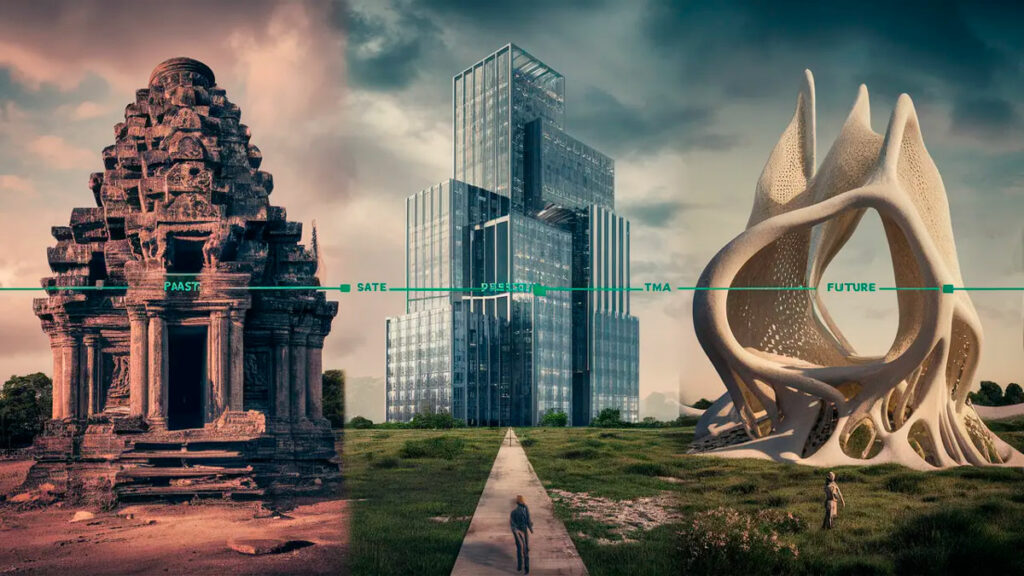
Universities Are Training AEC Professionals for Yesterday’s Industry, not the AI Future.
Architecture, engineering, and construction are entering one of the biggest transitions since CAD replaced manual drafting and BIM replaced isolated 2D documentation.
Yet many universities are still training future architects and engineers as if the profession’s main challenge is to manually produce drawings, memorize static technical rules, and follow linear design processes.
That model was already under pressure when Revit, BIM coordination, cloud collaboration, computational design, and digital fabrication became standard in many firms. With AI, it becomes even more outdated.
The problem is that most AEC education is structurally designed around a slow-changing professional world, while the industry is becoming a continuous-learning, software-driven, data-rich, AI-augmented environment.
AEC does not need graduates who only know how things were done. It needs professionals who understand buildings deeply, but can also work with data, automation, simulation, AI systems, digital delivery, and rapidly changing tools.

The AEC education gap
Most architecture and engineering programs are still built around a traditional assumption:
A student studies for many years, graduates with a broad professional foundation, enters the workforce, and then slowly learns practice through experience.
That made sense when professional tools changed slowly. It made less sense during the CAD-to-BIM transition. It makes even less sense in the AI era.
Autodesk’s 2025 State of Design & Make Report found growing optimism toward AI in design and make industries, with 35% of respondents saying AI will help supplement a skills gap.
Autodesk also reported in a 2025 skills-focused edition that AI and emerging technologies are becoming strategic priorities, with business leaders continuing to invest in them.
The World Economic Forum’s Future of Jobs Report 2025 similarly emphasizes that technological change, AI, and the green transition are reshaping jobs and increasing the importance of reskilling and lifelong learning.
But university programs often remain organized as if a fixed curriculum can prepare someone for a 40-year career. That is no longer realistic.

We already saw this mistake with manual drafting
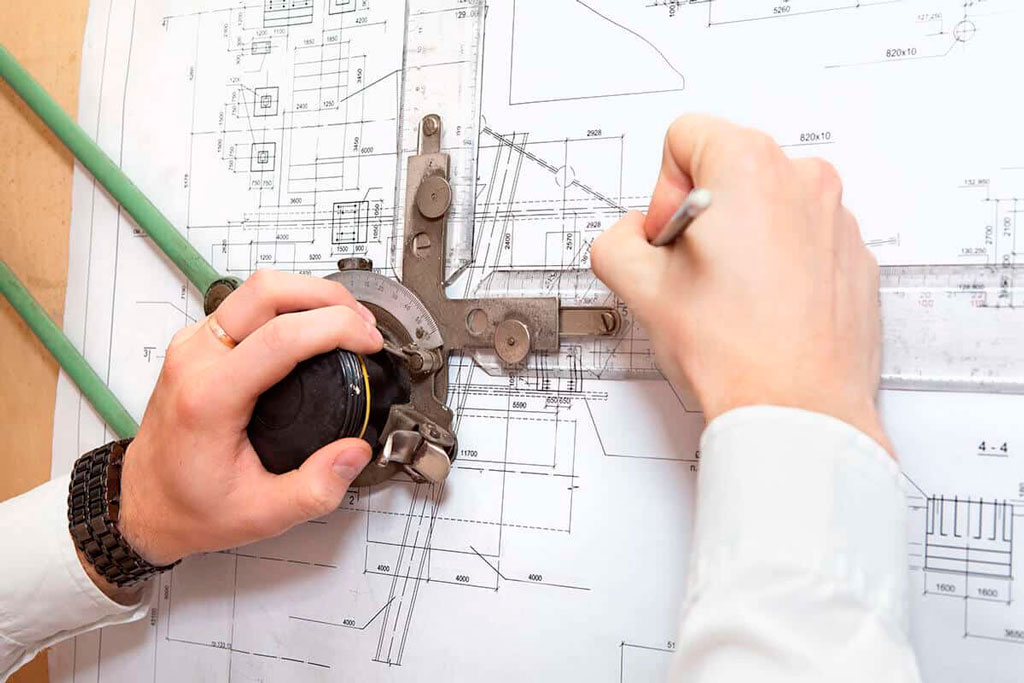
AEC has been here before. For years, many architecture schools continued to train students heavily in manual drafting, hand rendering, and traditional representation methods while professional practice was moving toward CAD, then BIM, then cloud-based model coordination.
There is value in drawing by hand. Sketching helps develop spatial thinking, proportion, composition, and design intuition.
The problem is treating it as the center of professional preparation when the industry has moved to model-based delivery.
Today, Revit and BIM workflows are not just “drawing tools.” They are databases, coordination environments, documentation engines, and collaboration platforms.
Autodesk describes Revit as BIM software, while AutoCAD is CAD software; firms may still use both, but Revit supports BIM deliverables and multidisciplinary collaboration. (Autodesk)
The same pattern is now repeating with AI.
Many schools are treating AI as an elective topic, a visualization shortcut, or a controversial add-on.
But AI is not just another tool for producing images. It is becoming a layer across research, feasibility studies, code analysis, quantity takeoffs, cost estimation, sustainability studies, clash review, specification writing, model interrogation, and project knowledge management.
The mistake would be to teach AI the same way many schools taught CAD: too late, too superficially, and disconnected from professional workflows.
The AI future of AEC is not only about design generation
A common mistake in architecture education is to reduce AI to “text-to-image design.” That is a very limited view.
The deeper transformation is not that AI will magically replace architects or engineers. It is that AI will change how professionals access information, validate options, automate repetitive tasks, and make decisions.
In the AI-enabled AEC workflow, professionals will increasingly need to know how to:
- Extract structured data from BIM models.
- Query project information using natural language.
- Connect models to cost, carbon, schedule, procurement, and facility data.
- Evaluate options using simulation and optimization.
- Use AI to check code requirements, but understand where the AI may be wrong.
- Build workflows that combine Revit, IFC, APS, ACC, Speckle, Rhino/Grasshopper, Python, databases, and APIs.
- Validate AI outputs against engineering logic, building codes, constructability, liability, and safety.
- Understand data quality, not just visual quality.
This is a very different skill set from the one many universities prioritize.
A beautiful rendering is not enough. A correct model is not enough. A professional in the AI era must understand the relationship between geometry, metadata, regulations, performance, cost, construction sequence, and risk.
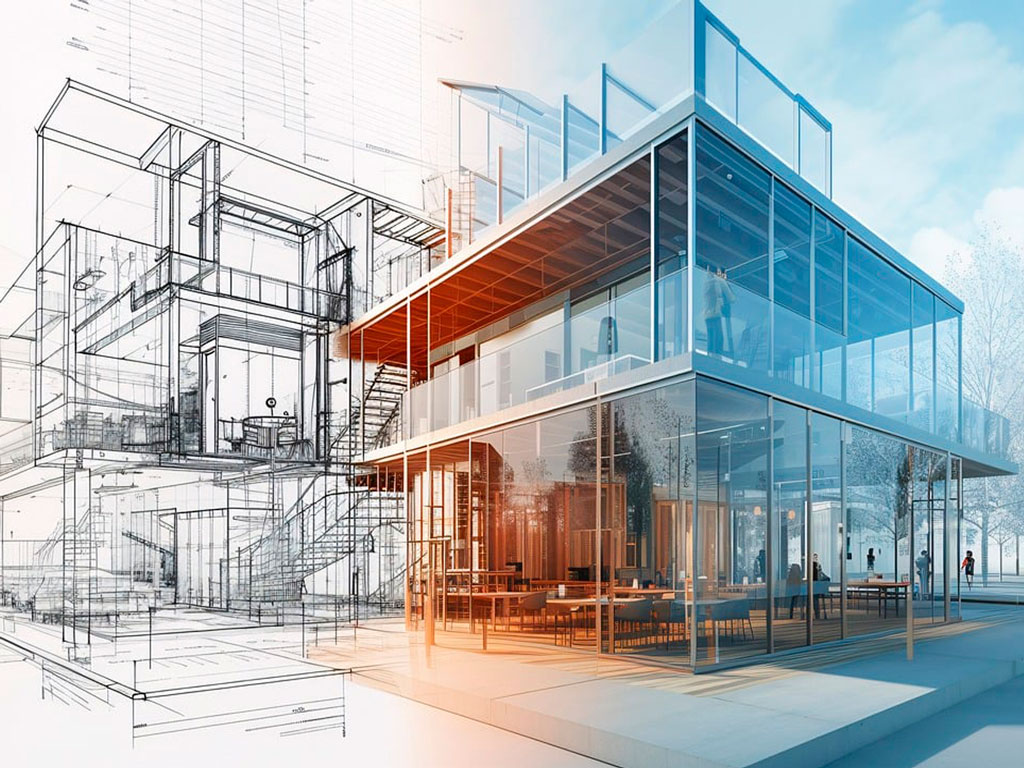
Architects need AI literacy around ambiguity, systems, and decision-making
Architects work with ambiguous constraints: aesthetics, human experience, urban context, client goals, regulation, sustainability, budget, and constructability.
AI can help generate options, summarize regulations, compare precedents, analyze site constraints, and communicate ideas.
But architects need to learn:
- How to structure design intent so AI tools produce useful outputs.
- How to evaluate AI-generated options critically.
- How to connect design decisions to performance data.
- How to work with BIM as a project database, not just a documentation tool.
- How to use AI to accelerate research, feasibility, zoning studies, and early design validation.
- How to manage proprietary firm knowledge as a design advantage.
- How to preserve authorship, ethics, and accountability when using generative tools.
The architect of the future is not only a form-maker. They are a curator of constraints, a systems thinker, a communicator, and a decision-maker supported by computational intelligence.

Engineers need AI literacy around precision, validation, and automation
Engineers have a different relationship with AI. Their work is more directly tied to calculation, safety, performance, and compliance.
AI can accelerate engineering workflows, but only when outputs are traceable, testable, and validated.
Engineers need to learn:
- How to automate calculations without losing control of assumptions.
- How to use Python, APIs, and data pipelines to process project information.
- How to validate AI-generated engineering suggestions.
- How to connect analysis models with BIM models.
- How to use optimization tools for structure, energy, MEP systems, logistics, and cost.
- How to document assumptions and maintain auditability.
- How to distinguish between a plausible answer and a correct answer.
For engineers, the AI future is less about visual generation and more about automation, simulation, verification, and decision support.
Architecture education should become more computational and data-aware. Engineering education should become more software-native and automation-oriented.
Both need AI, but not in the same way.

Careers are too long for the speed of technological change
AEC careers are often designed as long, rigid paths. Architecture is a clear example. In the United States, NCARB reported that, on average, candidates took 13.3 years to earn an architecture license in 2023. (NCARB)
That number includes education, experience, and examination. It reflects the seriousness of the profession, but it also highlights a major issue: the path to becoming fully credentialed can be longer than the lifecycle of multiple generations of technology.
Think about what can change in 13 years:
- Manual CAD workflows can be replaced by BIM.
- Local files can be replaced by cloud collaboration.
- Point solutions can be replaced by integrated platforms.
- Traditional rendering can be replaced by real-time visualization.
- Static spreadsheets can be replaced by dashboards and data pipelines.
- AI assistants can become embedded across design, coordination, and documentation.
A professional education model that takes more than a decade to fully complete cannot rely on one fixed front-loaded curriculum.
The alternative is to make it more modular, specialized, and continuous.
The future should be shorter initial education plus continuous training
AEC education should move away from the idea that one long degree prepares a person for professional life.
Instead, universities and licensing bodies should consider a model based on:
- A shorter core foundation.
- Earlier specialization.
- Mandatory continuous professional training.
- Industry-recognized micro-credentials.
- Tool- and workflow-specific certifications.
- Recurring updates tied to changes in technology, codes, sustainability, and AI.
This is already how many technology-driven professions operate. Software developers, cybersecurity professionals, cloud architects, and data engineers cannot rely only on what they learned in university.
They are expected to continuously update their skills. AEC should move in the same direction.
A future architect or engineer should graduate with a strong foundation, but that foundation should be updated throughout their career through required training in topics like:
- AI-assisted design workflows.
- BIM and openBIM.
- Model checking and data validation.
- Building code automation.
- Embodied carbon analysis.
- Digital twins.
- Cloud collaboration.
- Computational design.
- Construction technology.
- Cybersecurity for connected project platforms.
- Data governance and interoperability.
- Ethics and liability in AI-assisted decision-making.
A long degree with no obligatory post-graduation technical training is a poor fit for an industry changing this quickly.

Universities should teach workflows, not just tools
One common objection is that universities should not become software training centers. That is true.
Universities should not simply teach “Revit,” “Rhino,” “Grasshopper,” “Python,” or “ChatGPT” as isolated tools. But they absolutely should teach the workflows those tools represent.
The goal is not to train students to click buttons. The goal is to train them to understand digital processes.
For example, instead of teaching only “how to model a wall in Revit,” schools should teach:
- What data is attached to that wall?
- How does that wall interact with schedules, quantities, cost, carbon, and code?
- How does the model coordinate with structure and MEP?
- What happens when that model is exported to IFC?
- What information is lost in translation?
- How can an API access that information?
- How could an AI assistant query or validate that wall?
- How does the model support construction, operations, and facility management?
That is the difference between tool training and technical education.

AI will reward firms with better processes, not just better prompts
AEC firms often ask, “How can we use AI?” But the better question is: Is our information structured enough for AI to be useful?
AI is only as valuable as the systems it can connect to. If a firm’s knowledge is scattered across PDFs, email threads, disconnected BIM models, inconsistent spreadsheets, and undocumented decisions, AI will produce shallow results.
This has major implications for education.
Universities should teach students that AI readiness depends on:
- Data quality.
- Naming conventions.
- Classification systems.
- Model structure.
- Interoperability.
- Documentation standards.
- Version control.
- APIs.
- Knowledge management.
- Validation workflows.
The firms that benefit most from AI will not necessarily be the ones with the most adventurous designers.
They will be the ones with the cleanest data, best processes, strongest technical culture, and most reusable knowledge.
That lesson should be part of AEC education.

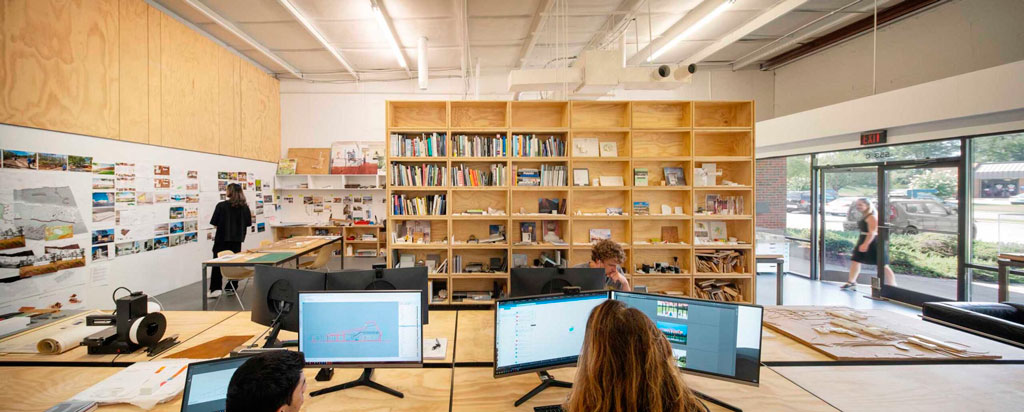
The studio model also needs to evolve
Architecture schools often rely heavily on the studio model. Studio culture can be powerful: it teaches iteration, critique, communication, and design thinking.
But the traditional studio often fails to represent how modern projects are delivered.
Many academic studios still focus on individual authorship, visual presentation, and conceptual narratives.
Professional practice, by contrast, increasingly involves multidisciplinary coordination, data exchange, technical constraints, procurement, carbon targets, owner requirements, digital deliverables, and risk management.
An AI-era studio should include:
- BIM-based collaboration.
- Structured project data.
- AI-assisted precedent research.
- Automated zoning or code checks.
- Cost and carbon feedback.
- Simulation loops.
- Multidisciplinary coordination.
- Version control.
- Model audits.
- Client-style decision documentation.
- Final deliverables that include both design and data.
Students should not only present boards. They should present decisions, assumptions, tradeoffs, model data, and validation methods.
AI makes judgment more important, not less
A common fear is that AI will make architects and engineers less necessary.
The opposite is more likely in high-stakes AEC work.
AI can produce plausible outputs quickly. But AEC is not a plausibility industry. A building must stand up.
A hospital must work. A data center must maintain uptime. A facade must perform. A fire strategy must be correct. A construction detail must be buildable. A cost estimate must be defensible.
The value of professionals will shift from manually producing every output to knowing how to evaluate, correct, and take responsibility for outputs generated by increasingly automated systems.
That means education should focus more on:
- Critical thinking.
- Technical validation.
- Systems thinking.
- Ethical reasoning.
- Risk assessment.
- Interdisciplinary coordination.
- Human judgment.
- Professional accountability.
AI does not remove the need for expertise. It punishes shallow expertise.

AEC education needs a new contract with the future
The AEC industry is becoming more technical, more integrated, more data-driven, and more dependent on intelligent systems.
Universities should not train architects and engineers only for the world of manual drawings, isolated disciplines, and static knowledge.
They should train them for a world where buildings are designed, analyzed, documented, built, and operated through connected digital systems.
That requires a new educational model: shorter foundations, earlier specialization, stronger technical training, continuous learning, and a much deeper understanding of AI, data, and automation.
The future AEC professional will not be valuable because they can manually produce what software can automate.
They will be valuable because they can define the problem, structure the data, guide the tools, validate the outputs, understand the consequences, and take responsibility for the final decision.
That is what universities should be preparing students for.
Right now, too many are still preparing them for the past.

Valentin Noves
I'm a versatile leader with broad exposure to projects and procedures and an in-depth understanding of technology services/product development. I have a tremendous passion for working in teams driven to provide remarkable software development services that disrupt the status quo. I am a creative problem solver who is equally comfortable rolling up my sleeves or leading teams with a make-it-happen attitude.