Moving on from Revit: Not “What Replaces It?” but “What Breaks It Apart?”
If you’ve spent any time inside a large AEC organization, the idea of “moving on from Revit” can sound like fantasy.
Revit is deeply embedded in how firms staff projects, standardize deliverables, manage content libraries, coordinate consultants, and exchange models. I
t’s not just software: it’s operational infrastructure.
And yet, the future after Revit is already forming. It just doesn’t look like a single “Revit killer.” It looks like an ecosystem shift: from one broad, desktop-centered platform to many smaller, cloud-native, workflow-specific tools connected by shared data.
This post is about what that future looks like—and why it will likely begin not in the biggest enterprises, but in the smaller, faster-moving teams.
Revit is still the main player (and inertia is real)
Revit remains the default BIM authoring environment in many markets, and there are signs of how entrenched it is:
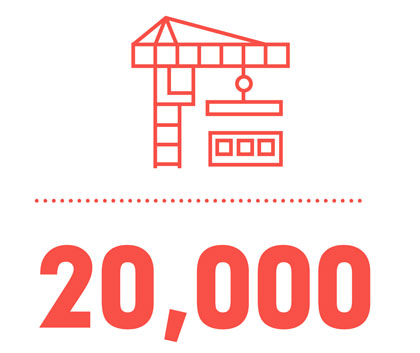
- Third-party market intelligence (6sense) estimates ~20,000 companies use Autodesk Revit, and places it at ~37–40% share in its “BIM and Architectural Design Software” category. (6sense)
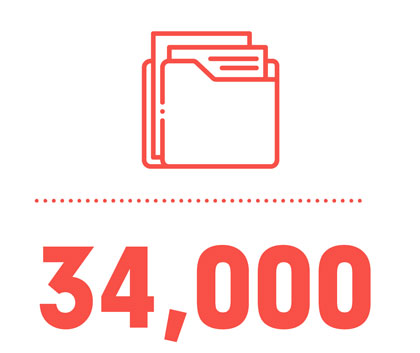
- At the enterprise scale, Revit usage can be massive: one Autodesk University case study describes 450+ active Revit users in a month accessing 34,000+ unique Revit files and generating 126+ million data points. That’s not a “tool,” that’s a data factory. (Autodesk)
- Autodesk’s own reporting continues to highlight growth tied to AEC and products including Revit (alongside AEC Collections, Autodesk Build, etc.). (investors.autodesk.com)
Now combine that with thousands of templates, families, parameters, and standards; deep integrations across the ecosystem (ACC/BIM 360, Navisworks, Dynamo, fabrication and analysis tools, custom add-ins); Revit literacy as a baseline hiring requirement; and long-term projects where switching authoring tools midstream is simply not an option.
For large organizations, replacing Revit isn’t “install new software.” It’s a multi-year organizational change program.
So no—Revit isn’t disappearing soon. But that doesn’t mean the center of gravity won’t shift.
BIM adoption is high—and that changes the game
A key reason disruption is now plausible: BIM is no longer “emerging.” It’s mainstream.
- In the UK, NBS survey reporting has shown BIM adoption hovering around ~70%, with variation by year but broadly stable in that range. (Construction Management)
- The BIM software market itself is projected to grow significantly: one market estimate puts it at ~$8.12B in 2024, reaching ~$22.08B by 2032. (Fortune Business Insights)
When adoption becomes normal, the next competitive battleground shifts from “Should we do BIM?” to How fast can we produce decisions, How clean is the data, How many workflows can be automated? and the list goes on an on.
And this is where Revit’s age starts to show as there are multiple limitations:

1- Is not live

2 – Is Desktop so you need to install it and update it every certain time

3 – Is single thread so automating task is a slow process

4-Is not really good to process data
The core problem: Revit is too broad for the next decade
Revit tries to be the single environment for so many stakeholders from owners and architects to Structural engineers, contractors and even owners.
It’s true that this breadth created an industry standard—but it also creates friction:

1) Everyone’s workflow competes for the same “center”
When one platform serves too many stakeholders, the result tends to be:
- Feature compromises
- UI complexity
- Heavy files and performance bottlenecks
- Slow iteration for specialized needs

2) The “model” becomes a battleground, not a product
Teams end up negotiating how to model instead of what decisions to make.

3) Innovation speed is constrained by backward compatibility
The larger the installed base, the harder it is to take bold steps that break workflows.
That’s why the “future after Revit” likely isn’t one platform that does everything. It’s a shift to specialized tools that do one thing extremely well, connected through shared data and APIs.
The cloud transition isn’t optional anymore
Cloud matters not because it’s trendy, but because AEC’s biggest constraints are now collaboration, compute, and data continuity.
Here’s why cloud-native workflows win:
1) Real-time collaboration becomes a default expectation
Revit’s collaboration is workable, but the future expectation is closer to “Google Docs for BIM” (simultaneous, conflict-aware, always-on).
2) Compute-heavy tasks move out of the workstation
Think:
- Generative options
- Energy/carbon simulations
- Automated code checks
- Clash detection variants
- Quantity + cost scenarios
- AI agents running model queries
Those aren’t “GPU workstation only” jobs. They’re batch/parallel cloud jobs.
3) Data becomes the product, not the RVT file
More firms are starting to treat BIM as a database of decisions.
Autodesk itself has been pushing toward connected cloud workflows—for example, Revit becoming a “Forma Connected Client,” intended to bridge desktop authoring with cloud capabilities and shared data across tools. (Autodesk)
This is an important signal: even Autodesk’s direction implies that the future is not purely Revit-on-desktop, but Revit as one node in a broader cloud ecosystem.

Why disruption starts with smaller, agile organizations
Big firms have more budget—but they also have more legacy.
Smaller firms:
- Have fewer templates to migrate
- Make faster tool decisions
- Can standardize quickly
- Are more willing to trade “feature completeness” for “speed + simplicity”
This is exactly how many SaaS categories shift.
The Salesforce vs HubSpot analogy
Salesforce has long dominated enterprise CRM (large deployments, deep customization). IDC data cited by Salesforce puts Salesforce at ~21.7% CRM market share in 2023 and ~20.7% in 2024—still #1, still enormous. (Salesforce)
HubSpot, meanwhile, scaled by owning the “easy onboarding + fast time-to-value” segment and climbing upward—reporting 278,880 customers as of Sept 30, 2025. (HubSpot)
Translation to AEC:
- Revit is Salesforce: powerful, entrenched, enterprise-grade, hard to replace.
- New BIM tools can win like HubSpot: start with a narrower promise, execute brilliantly, build trust, then expand upmarket.
The shift starts where switching costs are lowest.
The challengers: “BIM 2.0” isn’t one thing
A new wave of platforms is attacking Revit from different angles—often not by copying Revit feature-for-feature, but by unbundling workflows.
Snaptrude (cloud-native BIM authoring + collaboration)
Snaptrude is one of the most visible “cloud BIM authoring” bets and they are clearly leaning into AI + collaboration as core identity.
What it signals: authoring is moving toward browser-first experiences, faster iteration, and easier sharing.
Hypar (automation + focused workflows)
Hypar has increasingly emphasized focused workflows like space planning, positioning itself as Revit-compatible and cloud-based.
What it signals: the “future after Revit” may be less about replacing authoring and more about automating high-value slices of design work.
Qonic (cloud BIM platform)
You mentioned “Conic”—the closest clear match in the BIM space is Qonic, which positions itself as a cloud-based BIM modelling platform emphasizing speed, collaboration, and access-anywhere workflows.
What it signals: performance + accessibility (no hardware limits) is becoming part of the value proposition, not an afterthought.



The bigger trend: unbundling Revit into “best-of-breed” tools
If I need to describe the features of the tools that will complement or replace Revit it would be the following ones:
A) A lightweight cloud authoring core
Not necessarily as deep as Revit at first—but good enough for many building types and phases.
B) Specialized vertical tools that are exceptional at one job
Examples of likely winners:
Electrical design (circuiting, load calcs, panel schedules, code checks)
Lighting design (photometrics, controls, energy code validation)
Clash + coordination that’s model-format agnostic
QTO / estimating tightly connected to live model data
Carbon accounting embedded from early massing to CD
Code compliance engines that run continuously
FM / asset data tools that treat BIM like a database, not geometry
These tools don’t need to replace Revit. They just need to become the place where decisions happen.

C) A shared data layer
This is the real endgame:
- Model data stored and queried like a modern system (APIs, versioning, lineage, permissions)
- Interoperability as a first-class requirement
- Continuous validation (like CI/CD for buildings)
When that happens, Revit can remain a major authoring node—but it’s no longer the center of the universe.ping
So… what is the future after Revit?
Revit isn’t going anywhere anytime soon, especially for large organizations. The switching costs are simply too high, and its breadth of functionality remains unmatched.
That said, new tools are emerging every day, slowly breaking the paradigm of a single, all-in-one platform.
The future isn’t a single Revit killer—it’s an ecosystem of focused, purpose-built tools that complement Revit and selectively replace parts of it, each excelling in its own niche.
Want to explore what the future after Revit means for your organization?
Schedule a conversation to discuss data, cloud workflows, and how to prepare your BIM stack for what’s coming next.

Valentin Noves
I'm a versatile leader with broad exposure to projects and procedures and an in-depth understanding of technology services/product development. I have a tremendous passion for working in teams driven to provide remarkable software development services that disrupt the status quo. I am a creative problem solver who is equally comfortable rolling up my sleeves or leading teams with a make-it-happen attitude.